Philosophy,
For Everyone
Public Philosophy Week brings people together to explore life’s biggest — and smallest — questions in familiar places. Each conversation centers on a chosen topic and invites participants to think, listen, and wonder together. It’s philosophy outside the academy, in the middle of everyday life. No background needed. Just curiosity.
How the Week Takes Shape
The full schedule unfolds in real time. As new hosts and presenters come on board, events are added across towns and venues throughout Vermont. Keep an eye on the calendar — conversations are added frequently.

Philosophy,
For Everyone
Public Philosophy Week brings people together to explore life’s biggest — and smallest — questions in familiar places. Each conversation centers on a chosen topic and invites participants to think, listen, and wonder together. It’s philosophy outside the academy, in the middle of everyday life. No background needed. Just curiosity.
How the Week Takes Shape
The full schedule unfolds in real time. As new hosts and presenters come on board, events are added across towns and venues throughout Vermont. Keep an eye on the calendar — conversations are added frequently.

⫸ Burlington
Join Juniper Lovato and Kate Mays in discussing the ethical ramifications of AI when viewed as conscious.
⫸ Burlington
Join Juniper Lovato and Kate Mays in discussing the ethical ramifications of AI when viewed as conscious.
⫸ St. Johnsbury
Michel de Montaigne has been called the first moral philosopher to “put cruelty first” in the catalog of human wrongs. In this session, Garret Keizer will provide a brief and decidedly personal introduction to his work considers it as a useful guide for any thinking person—and as a no less useful goad to our national conscience.
⫸ St. Johnsbury
Michel de Montaigne has been called the first moral philosopher to “put cruelty first” in the catalog of human wrongs. In this session, Garret Keizer will provide a brief and decidedly personal introduction to his work considers it as a useful guide for any thinking person—and as a no less useful goad to our national conscience.
⫸ St. Johnsbury
Michel de Montaigne has been called the first moral philosopher to “put cruelty first” in the catalog of human wrongs. In this session, Garret Keizer will provide a brief and decidedly personal introduction to his work considers it as a useful guide for any thinking person—and as a no less useful goad to our national conscience.
Sat April
⫸ Burlington
Sometimes we don't get to be the people that we take ourselves to be. In this session, Erin Long and Finley Selzer will examine a case where a gay person is surrounded by homophobic people and can't be the gay person they take themself to be. In this discussion of identity, Finley and Erin will share their differing views to decipher what's really going on here.
⫸ Burlington
Join Rachelle Gould for an exploration of why nature matters. In our modern age, many philosophers believe it is because nature provides for human needs or because nature matters in and of itself (regardless of humans). Recently, a new reason is on the scene: that nature matters because of the relationships people have with it. In this session, we will review these reasons, then engage in a simple activity to help think through which make most sense to those in attendance.
Sun April
“
There is no power for change greater than a community discovering what it cares about.
— Margaret J. Wheatley
⫸ Burlington
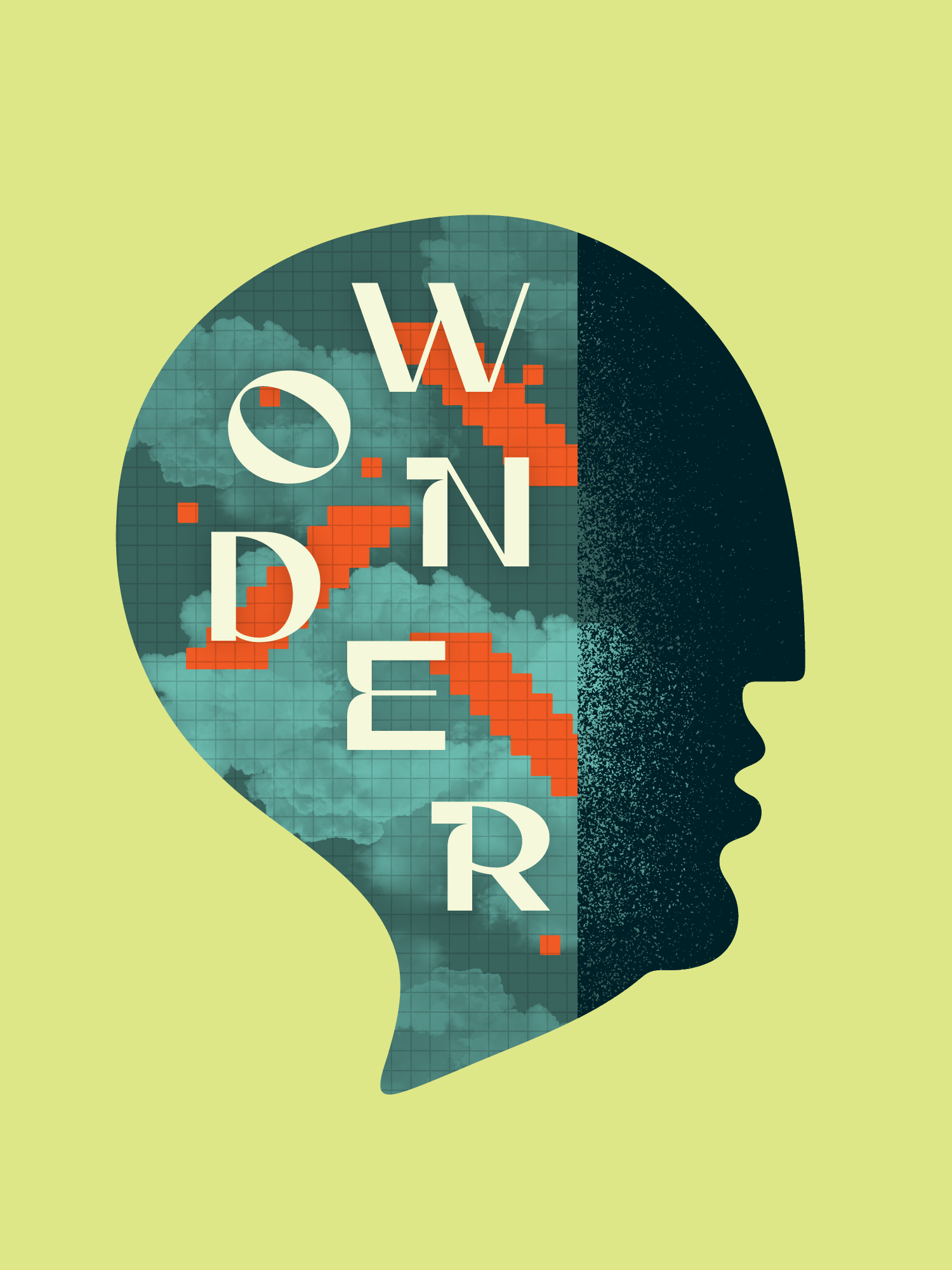
In this session, Crystal L'Hote will consider the philosophical concept of “wondering.” What is wondering, and what is it good for? Further topics will include whether it is politically responsible to wonder, what happens if we wonder together, and the consequences of choosing not to wonder at all.
Mon April
⫸ Burlington
As we face tumultuous times on Earth, space exploration and settlement has become increasingly appealing. In this discussion, Holly Painter will examine our planet’s billionaires plans for exploration, space colonization, and whether we have really thought space exploration through. Join us for a presentation and conversation on the ethics of space settlement.
⫸ Burlington
Homer's epic poems have captivated audiences for millennia. While the poem's continued relevance is reliant on their translation into modern languages, audiences often discount the impact of these translations. Join Tessa Lawler in learning how the translations we choose influence our understanding of these ancient stories. We'll examine different philosophies of translation and put them to the test as we tackle some of the most controversial elements of the Homeric epics.
⫸ Burlington
This talk with Patrick Standen explores the philosophy of sport to show what play reveals about being human. Before there were scoreboards, trophies, or billion-dollar stadiums, humans were running, wrestling, and inventing games purely for fun. From backyard matches to global spectacles, sport energizes us, frustrates us, unites us, and somehow reveals who we are. From backyard pickup games to the Olympics or Paralympics, we will examine what sport is, why it captivates us, challenges us, and sometimes even transforms us. Come prepared to rethink what counts as “a game”—and why it matters more than we admit.
Tue April
⫸ Burlington
Animal food production relies on the use of animals for their end products, which creates concerns about the treatment of animals in agriculture. Join Kate Creutzinger for a presentation that explores the ethical complexities of dairy production, focusing on the balance between animal welfare, economic sustainability, and societal expectations. We will examine key issues such as cow–calf separation, surplus calves, and the use of emerging management practices aimed at improving welfare outcomes. By integrating scientific research with ethical frameworks, the talk invites discussion on how the dairy industry can evolve to better align with public values and responsible food production.
⫸ Burlington
Join Sheila Liming for a talk about changes to literacy and knowledge in the age of AI. We will be adressing questions questions like, what are books for, and what is the future of books?
⫸ Burlington
Join Abbie Kopelowitz for a philosophical discussion of Tabletop Role-Playing Games, such as Dungeons and Dragons. Embracing the spirit of these games, we will roll the dice to determine which subjects to discuss. Topics may include phenomenology & immersion, the ethics of gameplay, the nature of PCs & NPCs, randomness, game philosophy, and collaborative storytelling. Everyone is welcome, regardless of gaming or philosophical experience.
Wed April
⫸ Burlington
Join Andy Barker, Senior Program Officer at the Vermont Community Foundation, for a discussion about philanthropy. We will consider questions such as: Should you give your money away? If so, to what or whom? How should you decide? Or should you let others decide? Does philanthropy alleviate inequality or reinforce it?
Thu April
-
"Public Philosophy Week is good thinking at its finest—and most democratic, because it asks us to think about what we know and how we might share it with our community. And it simultaneously asks us: what do you want to learn, and who in your community might teach you? It takes seriously the idea that we are all thinkers, all philosophers, and all contributors to the public good."
—Ilyse Morgenstein Fuerst
-
"Public Philosophy Week provides new inroads to community. Whether hearing a familiar community member talk about new topics or taking time to dig deep in familiar spaces with strangers, you never walk out with an empty mind."
—Clare LaFrance
-
"I go to as many sessions as I can! Every offering is unique, but they all bubble and fizz with interesting ideas. I love the idea of all kinds of people tucked into coffee shops and classrooms and libraries thinking about stuff together. With a friend, on my own, new topic, old topic, mostly listening or sharing a few thoughts; it always works."
—Andy Barker
⫸ Winooski
Join Sarra Talib, a chef/restaurateur, and Aaron Josinsky, a food systems scholar, in a conversation about the intersection of nostalgia and sustainable food systems. In our rapidly changing world, many of us find ourselves yearning for some version of the past when things may have felt just a bit sweeter and a bit simpler. In this discussion, we will explore the role that nostalgia may play in generating collective visions for circular, and socially sustainable, local food system futures.
⫸ Castleton
In this discussion, Brendan Lalor will consider the use of AI in our daily lives and by people in power. Topics will include the use of AI by individuals versus the miliatry in times of war, as well as what happens to companies and states that set AI regulations. How should we make these life altering desisions about AI, and who should make them?
⫸ Burlington
In this session, Brian Glenney will consider the current period on Earth that has been dominated by human activity, and what it means to live a polluted, but good, life. Life in the Anthropocene is paradoxical. Pollution is an existential threat to the long-term survival of our planet, yet simultaneously makes life possible, even pleasurable, for humans and animals alike.
Fri April
⫸ Adamant
The ancient Greek historian Thucydides wrote The History of the Peloponnesian War in the fifth century BCE, yet it remains one of the greatest works of history in our modern world. In this discussion, Gary Scudder will look at his accounts of Pericles’s Funeral Oration and the Melian Dialogue to better understand Athens during a time of tension and decline. We will also assess what these stories might reveal about the United States during this turbulent age.
⫸ Burlington
In this discussion, Randall Szott and Selene Colburn will explore the true meaning of public art. A variety of gestures, actions, events, and objects are codified under the term “art.” In addition to multiple meanings and definitions, art has multiple notions of “public.” Who or what is art’s public(s)? And where do we locate it? Join us for a wide ranging discussion on aesthetics, politics, performance, and beyond.
⫸ Burlington
Join Rory Stein, a UVM philosophy student, for an investigation of holes, such as those in Swiss cheese or donuts. We will discuss questions such as: where exactly is a hole, can absences really cause things, and are holes like dragons and leprechauns?
Sat April
⫸ Winooski
Music serves as a creative outlet and a powerful medium to inspire community building and change. In this session, Abbey B.K. will discuss why music is so effective at bringing people together, whether through collective activism, shared moments of reflection, or live music experiences. We will reflect on the music scene in Burlington and discuss why bringing music to local spaces is important to the culture and community of our city.
⫸ Winooski
Jeanne Bright, teacher of a popular watercolor class at the Brown Public Library, will guide a talk on the philosophy of art. Instead of discussing painting techniques, please join Jeanne and Clare LaFrance for a philosophical exploration of art. All levels of artistic or philosophical knowledge are welcome.
Sun April
The People Behind Public Philosophy Week
THE COMMUNITY
Bring Your Ideas
Public Philosophy Week is built by those who take part. Whether you have a topic you'd like to present or a space you'd like to offer, we welcome your ideas. Reach us at:
THE DONORS
Keep The Conversation Going
Public Philosophy Week is made possible through the generous support of our donors and sponsors. Their contributions help create spaces where philosophical ideas can be shared in the community.
• UVM Humanities Center
• UVM Office of the President
• UVM Office of the Provost
• UVM Philosophy Department
• UVM College of Arts and Sciences
• UVM Center for Research on Vermont
• Middlebury College
• Middlebury College Philosophy Department
• Axinn Center for the Humanities at Middlebury College
• Venetian Cocktail & Soda Lounge
• Onyx Tonics