

PUBLIC
PHILOSOPHY
WEEK 2024
APRIL 14-20
Each year, we host a lively series of discussions, talks, tastings, and screenings, aimed at fostering thoughtful reflections on life's most meaningful questions. We continually update our lineup with new events as they take shape, so be sure to revisit this space for the latest updates.
Su
APRIL 14

People have faith in various things, such as their family members, friends, community select board, humanity, and God. Sometimes we wonder whether it makes sense for people to have faith in these things. The purpose of this talk is to draw upon recent philosophical literature in order to explore the character of faith, as it can admit of rather different understandings. Since faith in God is one of the more interesting and controversial applications of faith, I’ll dedicate some attention to it. That said, I am interested to ask if faith is a component of a well-lived life, whether religious or secular.

This session will explore the philosophical ideas of the Austrian novelist, Robert Musil (1880-1942), author of The Man Without Qualities, The Confusions of Young Törleß, and many short stories, plays, and essays. Musil studied engineering, physics, psychology, mathematics, and the science of sense perception, but chose to become a creative writer because he believed that Art was the best realm within which to explore the overlapping realms of aesthetics and ethics, subjectivity and objectivity, probability and possibility, alternate perceptions of reality and "normal" consciousness. He saw modern human beings as lonely minds floating, each of us, on our own plank in the wide sea; he wanted to discover the "Right Life," to find "another human being," and new ways to communicate, but was not satisfied with simple, comforting illusions.
Mo
APRIL 15

Why do we punish? What do we expect to accomplish when we do? Join us in a discussion about the philosophical and sociological bases for responding to crime and wrongdoing.

Join us for an evening of philosophical discussion on the ethical dilemmas presented in the TV show, Survivor! We will be exploring the blurred lines between deception, strategy, alliance-building, and manipulation with examples such as Johnny Fairplay’s infamous “dead Grandma” lie and Jeff Varner’s outing of Zeke Smith at tribal council. We will also feature some other specific topics and examples from seasons 7 (Pearl Islands), 8 (All-Stars), 20 (Heroes vs. Villains), 22 (Redemption Island), 23 (South Pacific), 26 (Caramoan), 27 (Blood vs. Water), 28 (Cagayan), 33 (Millennials vs. Gen X), and 34 (Game Changers), for those who might want to review some of Survivor's most iconic moments. Whether you're a seasoned fan of the show or just beginning your Survivor journey, you won’t want to miss this!

So: you may have noticed that we're tip-toeing up on creating artificial intelligence — real AI, the sci-fi stuff — and as a consequence, some classic, difficult philosophical questions about minds and morals have taken on a touch of urgency. What counts as a mind, anyway? How could we get AI that is honest, or creative, or kind? Come discuss: how today's AI systems get built (and what us humanities majors can contribute); how AI's "orthogonality thesis" is Hume's "is-ought problem" back for revenge; how consciousness remains very confusing (but you might not need it to be smart!); and more. Questions about how to navigate safely into an AI-filled world have been called "philosophy with a deadline" — let's get cooking.

Miranda Fricker introduces two forms of injustice that are specifically about knowledge in her influential book Epistemic Injustice Power & the Ethics of Knowing. We will discuss these forms of injustice, the significance of this work in epistemology, and talk about how these concepts might be helpful in our own lives. All are welcome to come and discuss this work.

The talk will discuss how water as a metaphor in Dao De Jing points to a kind of soft, passive, non-aggressive power.

How do we think about time? We talk about buying it, biding it, wasting it. We measure it in scientific, mathematical units, like seconds, minutes, and hours, but also in socially constructed units, like pay, meetings, and even distance. We add time to our years in Leap Years and subtract hours to accommodate farming and shopping in Daylight Savings. We build calendars. How we make time tells us a lot about what we value and how we value it. Let’s talk about how making time is a political act, one that cannot be neutral, and how making time can be a space of social justice—especially when we talk about religious inclusion.

Restorative Justice offers a unique alternative to our current criminal legal system that challenges the notion of punishment as equivalent to accountability. Some of those who practice RJ in Vermont, through state-funded dollars from primary stakeholders within the criminal legal system, recognize that our practices can reflect and replicate, to a lesser degree, many of the injustices or biases of the criminal legal system with regard to social class, race, and gender identity. Some practitioners have adopted the term “colonized restorative justice” to reference this status. We invite you to join us to reflect on Vermont’s infrastructure of centers that are trying to reform a system from within the system.

Join us for pizza, drinks, and discussion about the Community News Service led by a panel of alumni that works in journalism or a related field.
Tu
APRIL 16
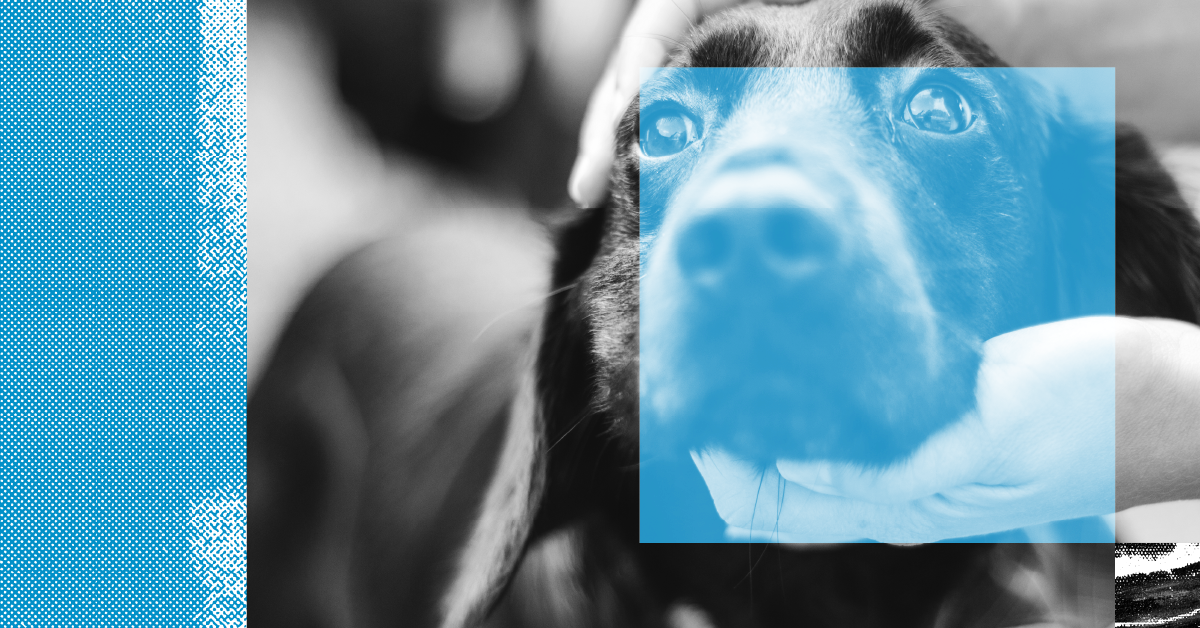
You have probably had an experience of communicating with a dog or a preverbal baby without using language, but how can you know if you can really understand each other? And what about all of the other beings we relate to on a daily basis — potential foods, pets, or wildlife neighbors — if we can’t talk, can we still communicate? And in any case, how can we make sure we are relating well? This interactive presentation draws from diverse philosophical traditions and weaves together artmaking with fish and deer, meditation with insects (even those we’d rather not, like ticks and mosquitos!), and responsibilities to (and of) rivers.
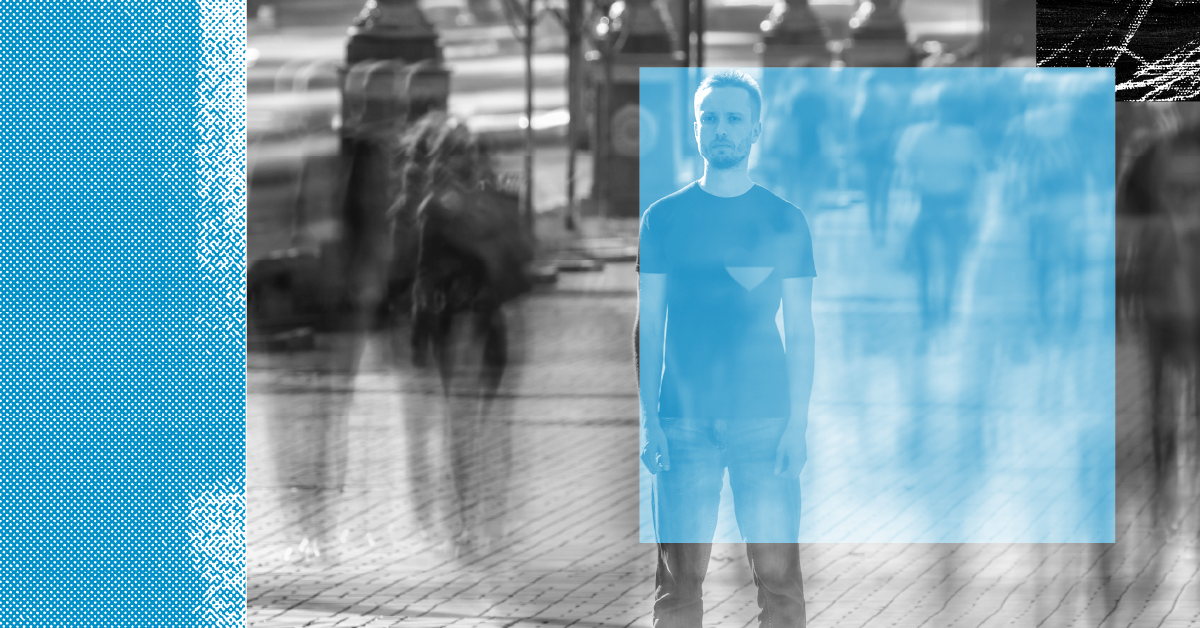
Is the clock ticking more slowly? How long have I been thinking this thought? Does time even exist?? Join The Reverend Colonel for a discussion on how cannabis can lend insight into our perception of time

We’ll discuss the promise and dangers of psychedelics; whether Vermont should decriminalize/legalize them; their therapeutic, spiritual, epistemic, and transformational value for individuals, as well as their potential role in catalyzing climate consciousness; and whether it’s ethical to use them therapeutically, spiritually, and recreationally.

We will examine the ethical dimensions of consuming true crime, reflecting on its focus on cases with white, female victims and its potential impact on prosecutorial decisions. We will also consider true crime's influence on perceptions of crime rates, the commodification of grief, and the broader issues of victims' rights within its profitable framework

We read for all sorts of reasons: for amusement, to make it through class, to mend a broken heart, to appreciate beauty - and almost always to improve ourselves in some fashion. Years ago a friend asked me to list the books that had made me a better person. My answer then - the Qur'an, Marcus Aurelius's Meditations, and Marcel Proust's Remembrance of Things Past - would be my answer today. We'll talk about those books, what they have to tell us, and the odd ways that three books that seemingly have nothing in common actually intersect. None of us are a product of one book or one philosophy or one discipline, and sometimes it's the shared spaces on our intellectual Venn diagram that tells us the most about ourselves. And I'd like to hear about the books that (maybe, potentially, hopefully) made you a better person.

Gather to ponder our philosophical positions around climate change, a feature of the anthropocene which presents a host of unique challenges for conscientious people. This casual yet timley conversation seeks to explore the what-to-do's and should-we-do-anything's around this very important matter. Informal conversation to be led by UVM Professor of Philosophy Mike Ashooh.

Join poet Holly Painter for an evening of poetry games invented and inspired by the L=A=N=G=U=A=G=E Poets. This hands-on workshop will make you think about poetry from new angles.

Philosophy-themed trivia.
We
APRIL 17

Come discuss Migrant Justice's history and current projects, as well as the organizing philosophies that inform our work: Worker-driven Social Responsibility, solidarity, grassroots organization, popular education, collective liberation, and more.

Prof Lorraine Besser will present her research on psychological richness and talk about how you can make your life better by making it more interesting.

Come to learn about Noyana Singers, a local group that sings to people in hospice care.
Where did we go wrong? In today's complex world, delving into Spinoza's timeless philosophical insights offers invaluable guidance in navigating the intricacies of many of our problems. Come to discuss and find out if his ideas might help.

Should kids visit their parents in prison? How do you explain prison to a young child? Why are kids with incarcerated parents more likely to become incarcerated themselves and how do we prevent this? Join us for a discussion around how parental incarceration affects children. Come with questions and an open mind.
What makes some conditions “illnesses”? What distinguishes “mental” illnesses from “physical” illnesses? Should mental illnesses be considered “brain disorders”? Join us for a discussion of these and other challenging and important questions in the philosophy of psychiatry.

Join John Pirone and Kristabel Stark for a conversation about deafness and special ed. We will open by sharing our insights and professional experiences related to special education in an informal manner. Following that, we'll encourage attendees to contribute their own perspectives. The session will then transition into a facilitated discussion focusing on two different question sets: one centered on theoretical and philosophical aspects and the other on practical applications.

Nikhil Goyal, sociologist and former senior policy advisor for Senator Bernie Sanders, joins Donald Tinney, a veteran high school English teacher and President of the Vermont branch of the National Education Association, to discuss Goyal's new book, "Live to See the Day: Coming of Age in American Poverty," which was named A Best Book of 2023 by The New Yorker. Last year, child poverty more than doubled in the United States, the largest single-year increase on record. Goyal and Tinney will discuss the crisis of child poverty, the implications for public education, and what we can do to address these inequalities.

In the Climate Kitchen, we are comfortable with ideas and things and actions that might not ever work out. Or they just might. Delicious food emerges from unexpected sources – insects, invasive species - or with new techniques – dehydrators, Instapots. Or cool new ways to compost the less delicious food and then use the compost. Or experiments on new (hybrid mung beans?) or old (buckwheat?) foods are designed and tested. Or something that we have yet to imagine. What do you think are the kitchens of the future? What do you think should happen in them? We will talk and taste our way to some ideas, in collaboration and in conversation.
Th
APRIL 18

By now it's well established that we're experiencing real dangers from climate change, yet meaningful global action to minimize its harms so far hasn't materialized. One radical solution is to engineer the planet's climate systems to lower global temperatures. Come discuss ethical questions about the costs, risks, and benefits of these technical fixes to the climate change problem.

Seven Days education reporter Alison Novak facilitates a conversation with three innovative and inspiring Vermont educators who are challenging traditional notions of what school should be. Panelists include Burlington elementary school teacher and Vermont Teacher of the Year Aziza Malik, Montpelier High School philosophy and Healthy Masculinity teacher Joe Carroll, and Habitat for Aviation founder Beth White.

Hannah Arendt once observed that people in America are lonely because they are busy. "In this country,” she explains in a letter from the 1940s, "one gets very lonely because people have so many things to do that, after a certain point, the need for leisure is quite simply no longer there." Arendt’s point is that the strain brought about by constant activity, or by the apparent necessity of performing such activity, prevents one from not just enjoying but even experiencing free time. So what is free time? How do we experience it? And what rights, if any, do we have to it? Come hang out and discuss what it means to hang out in a world where that feels increasingly difficult.

Restorative Justice aims to repair harm and resolve conflict - so what role does forgiveness play? Join restorative justice practitioners at the Hartford Community Restorative Justice Center for a collective conversation about forgiveness. We'll delve into what we mean when we say "forgiveness", the relationship between forgiveness and closure, the relationship between forgiveness and obligation, and the role forgiveness plays in a restorative practice. There will be a short grounding in the philosophy of restorative justice followed by a facilitated community conversation. We invite folks to come prepared to reflect on their own experiences with forgiveness.

We often find ourselves disagreeing with other people about factual matters. Sometimes, the people we disagree with would seem—apart from the disagreement, at least—to be just as likely to reach the truth on the relevant sort of matter as we are. What is the rational response to this sort of disagreement? This talk will defend the view that it is often irrational to maintain confidence in our beliefs in the face of this sort of disagreement. Along the way, it will explore some surprising implications of this view, and engage with some of the objections that have been raised against it.
Fr
APRIL 19

Aaron Carroll recently stopped raising pastured chicken on his Sowing Roots Farm in Underhill for a mix of ethical reasons. The writer/photographer is now largely vegetarian and "eats a lot of lentils." Kevin Markey is a Culinary Institute of America-trained chef with a master's degree in climate change, agriculture and food security. He is currently part of the team working on lab-grown meat at the University of Vermont. Aaron and Kevin will share their perspectives on animal agriculture and alternatives facilitated by Melissa Pasanen, food writer for Seven Days newspaper.

What obligation do people have to repair the natural world? Humans have transformed environments and diminished non-human life in landscapes around the globe. In response, the movement to restore ecosystems, and reconfigure humans’ place in them, has emerged. In this presentation, we explore two concepts which are essential to restoration: biophilia - the innate tendency to focus on life, and topophilia - the love of place. Plus, we report on the emotions that surface while acting as agents of restoration and ask: why does restoring nature makes us feel so good?

Social workers offer a structured conversation about compassion, its limits, and the toll it takes on our interconnectedness. Why can caring be so tiring? When do we get to be selfish? When and where do we ask personal compassion to do the work of institutional compassion? Where do we find balance between empathy and self-preservation? These questions, and likely many more, explored in community.

Why do people ask philosophical questions when they’re high? Why does weed make small questions seem so philosophical? How can cannabis be used to do philosophy? How can our perceptions of weed limit the way we interact with it? How do we open our mind and trigger divergent thinking? Join us on 4/19 for a conversation about the intersection of legal cannabis and philosophy. We aim to expand our thinking and be open to new perspectives, not to debate legality or shame other’s use of cannabis. What better way to prepare for the Holiday!
Sa
APRIL 20

Chatting with Confucius about the abortion debate with Chadzi Hansen conduction the séance using séantific interpretation, consulting Chat-GPT for views of the Elders of Chinese Studies. Take this opportunity to ask Confucius how different philosophical traditions think about moral debate.

Join a panel of journalists in conversation with attendees about what we need, want, and are getting from newsmakers. [The following is subject to change:] Spend an hour with Emily Corwin of American Public Media, Lola Dufort of Vermont Public, Colin Flanders of Seven Days and Tik Root of Grist.

Artificial Intelligence has become a ubiquitous feature of daily life, leaving our intelligent machines and their algorithms to rust in the places we inhabit...and in the Twilight Zone. Join Everywhere Philosophy's Dr. Mike & Bethany for an interactive viewing and exploration of The Lonely - Rod Serling's brilliant dramatic study at the intersection of AI and Personhood.

While we generally assume that friendship is a private question, Aristotle argued that friendship should play a central role in ethics, civics, and politics. Justice should be friendly, not punitive, on Aristotle’s view. Law-makers should cultivate civic friendship as much as justice. How does Aristotelian civic friendship knit together the social fabric? What lessons can we learn today from these ancient Greek ideals?

Emerson thought intellectual endeavor must go hand in hand with manual labor. So did John Ruskin, and Simone Weil. The ancient Greek poet Hesiod elevated work to the heights of a cosmogonic first principle, though Aristotle felt manual labor was beneath the life of the mind. Not so the Stoic Musonius Rufus, who wrote a treatise called “Why Farming is the Best Job for a Philosopher.” Come find out why at Works & Days Farm in Shoreham, your hosts Mark and Caroline Usher. Space is limited so please RSVP. And wear sturdy boots.

How does our relationship to philosophy (a Greek word) and to philosophical ways of knowing (a universal practice or predicament) depend on the language(s) we use? Two generations bring different perspectives on what it means to philosophize in and about translation. All people, tongues, and scripts are most welcome to attend and contribute!

What can you tell about the look of a ball from how it feels or about the feel of a cube from how it looks? Explore one of the oldest, most engaging philosophical thought experiments of all time--Molyneux's problem--with talk, discussion, paper folding, and fun hands-on experiments. Did you know you can hear shapes?
Special thanks to this year’s sponsors